


This week, I’m beginning a new chapter: joining Team8 as CISO in Residence, where I’ll help lead the CISO Village and guide the fund’s cyber ideation and company-building efforts.
After decades in security leadership roles — including some of the most closely watched incidents in our industry — I’ve come to a simple conclusion: technology alone will not carry us through what comes next. Communities will.
That belief is exactly why I chose Team8.
From Crisis to Community
In 2017, I joined SolarWinds and helped lead the company through the aftermath of the 2020 SUNBURST attack — one of the most deeply analyzed security events of the past decade. The experience was humbling, painful, and instructive.
In a moment like that, you learn quickly what really matters:
- Trust — with customers, partners, boards, regulators, and your own teams
- Transparency — even when the facts are incomplete and the path forward is unclear
- Resilience — the ability to keep making principled decisions under pressure, over months and years, not days
Those aren’t just technical attributes; they are human ones. You can’t build them in isolation.
Throughout that journey, I relied heavily on a global network of CISOs and security leaders — peers who had faced their own worst days, who understood the stakes, and who were willing to share what had gone right and wrong inside their own organizations. Over time, my role evolved from simply “running security” to helping define what modern CISO accountability looks like in boardrooms, in front of regulators, and in the court of public opinion.
That shift — from individual leader to part of a broader community — fundamentally changed how I see this job.
Why Communities Matter More Than Ever
Cybersecurity is entering another major evolution, driven by AI, rapidly changing enterprise architectures, and an expanding set of expectations from boards, regulators, and customers. The attack surface has never been more complex, but the expectations around resilience and trust have never been higher.
In that context, no CISO can afford to be an island.
A few realities stand out:
- The job is bigger than any one organization. CISOs are now central business leaders, responsible for managing one of the top enterprise risks, not just “IT issues.”
- The decisions are more consequential. How you communicate during a breach, how you frame risk to the board, and how you invest in resilience can shape careers — and entire markets.
- The playbooks are still being written. There is no definitive manual for being a modern CISO in an AI-first, cloud-native, highly regulated world.
What does exist is a growing fabric of trusted relationships: leaders who are willing to compare notes, debate approaches, and, crucially, be honest about where things broke.
I’ve seen firsthand how powerful that fabric can be. When a CISO picks up the phone and calls another leader who has “been there,” they aren’t just asking for advice — they are tapping into the collective memory of our profession.
At Team8, I’m happy to be that person for other CISOs and security leaders — the one you call when you need someone who’s been there. That’s how the industry moves forward.
This is why I believe in the power of communities. It’s also why Team8’s CISO Village caught my attention long before I had any formal connection to the firm.
What Makes Team8 Different
Team8 is not a traditional venture fund. It’s a venture builder and investor with a dedicated focus on cybersecurity, software infrastructure, fintech, and digital health, backed by $1.5B in AUM and a methodology that runs from early vision through real-world impact.
Three things stood out to me:
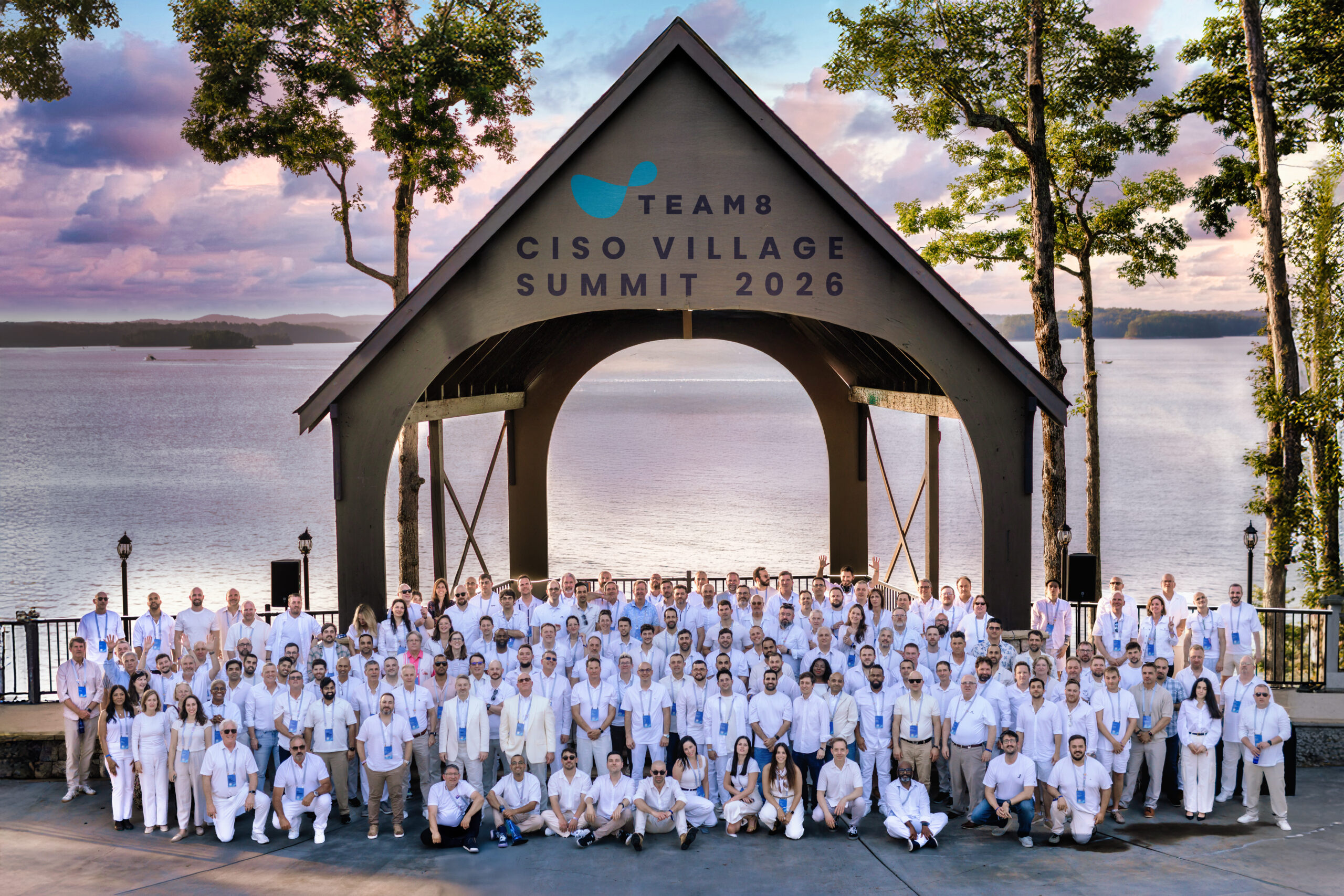
- A real community. Team8’s CISO Village brings together hundreds of global security leaders who actively share best practices, collaborate on emerging threats, and work alongside founders building the next wave of security companies. This is not a passive advisory board; it’s a working community with real influence on what gets built.
- Company-building grounded in operator reality. Team8 doesn’t just write checks; it co-founds companies with entrepreneurs and operators, validating ideas directly with CISOs and practitioners before a single line of code is written. As someone who has spent years telling vendors, “This doesn’t solve the problem I actually have,” that discipline matters to me.
- A platform for impact at scale. By design, Team8 sits at the intersection of founders, CISOs, boards, and global enterprises. The firm’s village of leaders and rigorous validation process mean that when a company emerges from Team8’s ecosystem, it is aiming at real problems with real customers behind them.
For someone who wants to spend the next chapter helping shape the next generation of cybersecurity companies, this combination is rare.
Why I Joined
After the formal conclusion of the SEC’s SolarWinds enforcement action, I had a choice: do I stay on the same path, or do I use that experience to help the broader community and the next wave of builders?
I chose the latter — and I chose Team8 — for three reasons:
1. Turning lessons learned into shared value
I’ve lived through a “career-defining incident” in a very public way. Those lessons shouldn’t stay locked inside one company’s history. I want to help CISOs, boards, and founders internalize what we’ve learned about resilience, disclosure, communication, and governance — before they’re tested in the same way.
Team8 gives me a platform to do that across dozens of companies and hundreds of security leaders, not just one environment.
2. Building what CISOs actually need
I believe the most important cybersecurity innovations in the coming decade will come from startups willing to rethink security from first principles — especially in areas like AI-driven security operations, vulnerability prioritization, and more adaptive defenses against complex threats.
At Team8, I can sit at the table from day zero:
- Helping frame the real problems that keep CISOs up at night
- Validating whether a proposed solution will actually work in messy, regulated, global environments
- Ensuring products are built for outcomes, not just features
That’s the kind of work I want to do.
3. Doubling down on the CISO community
Team8’s CISO Village is one of the few places where I’ve seen genuine peer-to-peer collaboration across industries, geographies, and stages — without the posturing that sometimes comes with public forums.
Joining Team8 lets me:
- Help shape the Village’s programming and direction
- Create more space for honest conversations about failure and recovery
- Make sure founders truly understand the lived reality of the CISOs they hope will become their customers
In short: it lets me invest in the very community that carried me through some of my hardest days.
What I’ll Be Doing as CISO in Residence
In my role at Team8, I’ll focus on three core areas:
1. Co-leading the CISO Village
Alongside Team8’s leadership, I’ll help further lead and expand the CISO Village — a global community of senior security executives — with an emphasis on:
- Deep-dive, off-the-record conversations about emerging threats and real-world incidents
- Practical exchanges on topics like board communication, regulatory expectations, and organizational design
- Connecting CISOs directly with founders and product teams to shape roadmaps early, not after launch
My goal is to make the Village an even stronger force multiplier for the industry: a place where security leaders don’t just consume ideas, but actively co-create them.
2. Guiding cyber ideation and company-building
I’ll work closely with Team8’s company-building and investment teams to:
- Identify emerging enterprise security priorities before they become mainstream
- Validate market needs and product concepts with CISOs and operators across the Village
- Support founders from ideation through early growth, with a clear view of what “good” looks like in a modern enterprise deployment
I’m particularly interested in how AI can be harnessed to improve security operations, resilience, and prioritization, without creating new blind spots or governance gaps.
3. Supporting portfolio companies and their customers
For existing and future Team8 portfolio companies, I’ll serve as:
- A critical friend — willing to ask hard questions about assumptions, deployment models, and risk tradeoffs
- A customer advocate — ensuring that what gets built is aligned with how CISOs run programs in the real world
- A bridge — helping founders, security teams, and boards talk to each other in a shared language
If we do this well, we won’t just launch more companies; we’ll launch better partners for the security community.
An Invitation to CISOs and Founders
If you’re a CISO or senior security leader, I’d love to see you inside the CISO Village. This is a space designed for candid, practitioner-led conversations — about what’s working, what isn’t, and what’s missing from the market.
If you’re a founder or aspiring founder in cybersecurity, I want to hear from you as well. The best ideas often start from a frontline frustration:
- A control that never quite worked the way it should
- A class of risk that remains stubbornly “accepted”
- A process that breaks every time the business changes
Team8 exists to turn those frustrations into companies — and to surround those companies with a community that will hold them to a higher standard.
Looking Ahead
Cybersecurity is, at its core, about trust: between users and systems, customers and vendors, boards and executives, regulators and the public. That trust is hard-won and easily lost.
I’m joining Team8 because I believe this is one of the best places in the world to help earn and rebuild that trust at scale — by supporting the CISO community, by backing founders who are serious about real-world outcomes, and by bringing hard-earned lessons into the open so others can benefit from them.
I believe in the power of communities. That’s why I chose Team8.

CISO in Residence