

Context Is King When Going Headless
The next phase of enterprise AI will be defined by platforms that can translate business intent into production outcomes without compromising governance or control.
That is the gap Tribal is built to close, and why we invested.
Enterprise systems are not blank canvases. They are complex operating environments built over years, with metadata, permissions, dependencies, automations, approval flows, integrations, and business logic layered on top of one another. They reflect how the organization actually works. Any meaningful change, especially one introduced by AI, has to operate with a deep understanding of that context.
Most AI tools still approach the enterprise from the outside. They generate snippets, suggest workflows, or automate isolated tasks. That can be useful, but it is not the same as making trusted changes inside systems of record. Without organizational context, AI can help generate output. It cannot reliably drive outcomes that get to production.
That is where Tribal stands out.
Tribal starts with the metadata fabric of the enterprise stack. It maps and enriches messy environments, reconstructs systems the way humans actually designed and evolved them, and analyzes downstream impact before anything ships. On top of that foundation, it enables governed AI agents to operate natively inside enterprise platforms.
We believe Tribal’s opportunity is a cross-platform play across the enterprise stack, including Salesforce, ServiceNow, NetSuite, SAP, and Workday. The moat is not access to any one platform, but the metadata fabric that allows Tribal to understand how these environments really work and turn business intent into safe execution across them.
That also gets to what Tribal does that the platforms themselves do not. Enterprise platforms expose APIs and agent frameworks, but they do not solve for real, messy customer environments. They are not built to serve the business and admin audience that needs change to happen without writing code, and they do not cover the full lifecycle from intent, to planning, to impact analysis, to governed deployment.
That distinction matters because the next wave of enterprise AI winners will be defined by who can move enterprises from experimentation to reliable implementation. CIOs and enterprise teams are no longer asking whether AI matters. They are asking which systems can be trusted, which workflows can be automated safely, and which changes can be deployed without introducing risk inside a real operating environment.
We think this becomes even more important as enterprise platforms move toward more headless, API-driven, and agent-first architectures. That shift creates real opportunity, but it also raises the bar. Opening systems to more autonomous workflows does not remove complexity. It increases the need for context, governance, and safe deployment.
Infrastructure alone is not enough. Access alone is not enough. Code generation alone is not enough.
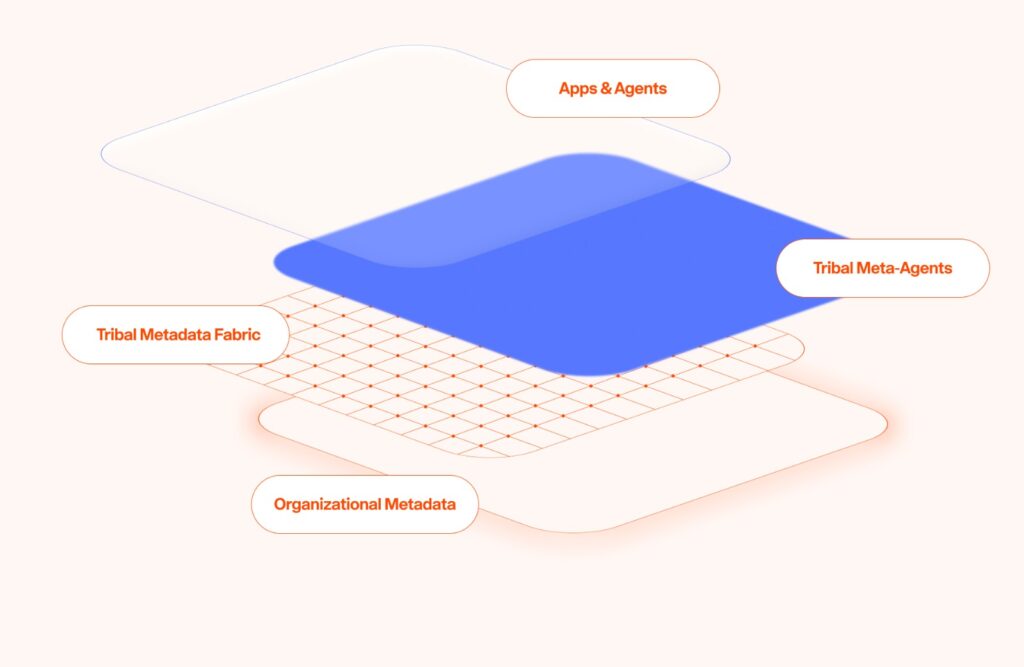
To make AI useful inside the enterprise, you need a system that understands how the enterprise actually works and can translate business intent into governed, production-ready execution inside that environment. We believe that shift will define the next phase of enterprise AI, and that is exactly where Tribal is building.
What makes this especially compelling is that the value is already showing up in the field. Tribal is working with companies including Adama, WalkMe, Dot Compliance, and Pro-Driven Brands, and has demonstrated as much as 5x faster delivery in real-world environments. That is the difference between an interesting demo and a system enterprises can actually use.
We also believe the timing is right. Across the market, enterprises are under pressure to turn AI into repeatable business impact. Executive and business teams want speed, but they also need trust. The companies that can deliver both will matter most.
Just as important, Tribal is being built by the right team. Yoav Kolodner, Yakir Daniel, and Lior Sidi know this problem from the inside. They have lived it at Salesforce, Spot.io, and Wix. They understand why enterprise change gets stuck, why generic AI approaches break down, and what it takes to build for production inside complex environments.
When we evaluate an investment, we look for a meaningful market shift, a strong technical thesis, and founders with a deep understanding of the problem they are solving. Tribal checks all three.
We are proud to lead Tribal’s $10 million seed round and excited to partner with the team as they build enterprise-native AI infrastructure that can bring governed agents into real production environments across the enterprise stack.
Go check them out at gotribal.ai.

Partner
Ori Barzilay is a Partner at Team8, where he invests in Cyber and Software Infrastructure companies.